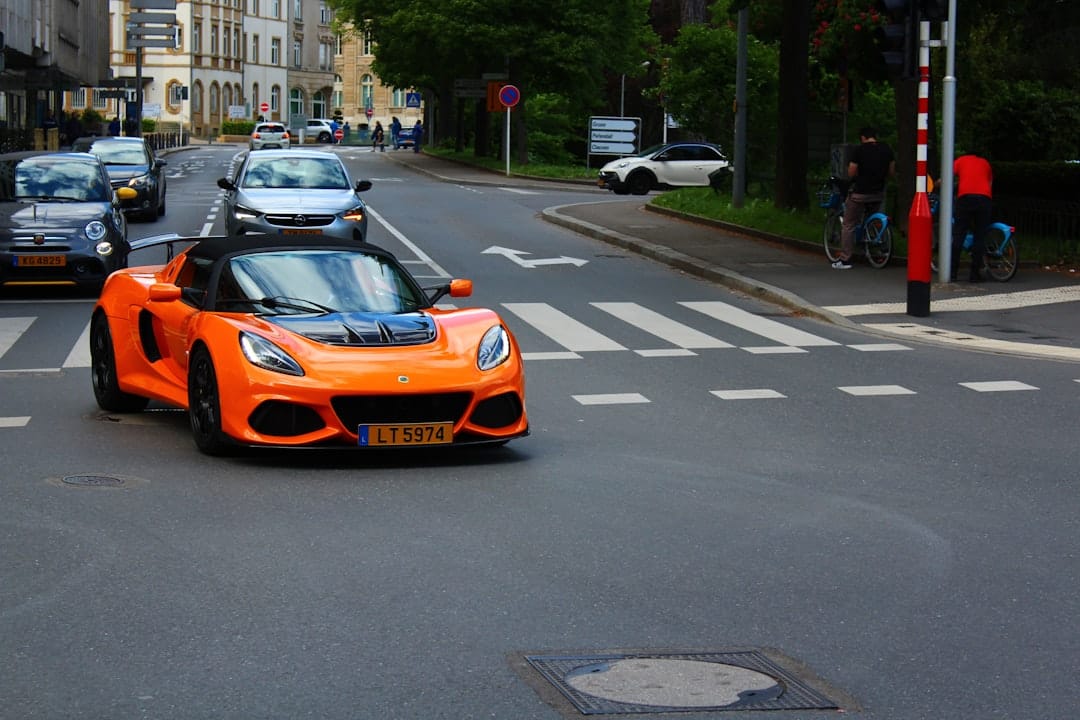
In a quiet revolution transforming the streets of Luxembourg, the Grand Duchy has emerged as a pioneer in electric vehicle adoption across Europe. With a maximum subsidy of €6,000 available for new BEVs with an energy consumption of less than 16 kWh/100 km and a comprehensive infrastructure overhaul, Luxembourg is redefining what it means to go electric in 2026.
The Heart of Luxembourg's EV Revolution: New Subsidy Structure
The cornerstone of Luxembourg's electric mobility transformation lies in its reformed subsidy system, which took effect on 1 October 2024 and runs until 30 June 2026. Unlike many European nations with blanket incentives, Luxembourg has adopted a sophisticated, consumption-based approach that rewards efficiency while accommodating family needs.
The new structure offers a maximum subsidy of €6,000 for new BEVs with an energy consumption of less than 16 kWh/100 km, a reduced subsidy of €3,000 for BEVs with consumption between 16 kWh/100 km and 18 kWh/100 km, and a €1,500 subsidy for second-hand BEVs that are at least three years old. This tiered approach encourages consumers to choose the most efficient vehicles while maintaining accessibility across different price points.
Special Provisions for Growing Families
Recognizing the unique needs of Luxembourg's diverse population, the government has introduced targeted support for large families. Families with five or more members can claim an additional subsidy of €6,000 for BEVs with seven or more seats, making electric people-carriers financially viable for growing households.
This family-focused approach acknowledges a critical gap in the electric vehicle market. "We recommend checking the energy consumption of your electric vehicle before you buy, as consumption of more than 160 Wh/km is quite common," advises the ACL mobility specialist, highlighting the importance of understanding these new consumption-based criteria.
Business Benefits: Tax Advantages That Make Sense
For businesses considering fleet electrification, Luxembourg offers compelling financial incentives that extend well beyond purchase subsidies. Expenses related to the purchase, maintenance, and use of BEVs as company cars are 100% tax-deductible until 2026, providing immediate cash flow benefits for forward-thinking companies.
The business case becomes even stronger when examining benefit-in-kind (BIK) rates. For 2025 and 2026, BEVs with consumption ≤ 16kWh/100km attract just 0.5% BIK, while those exceeding this threshold face 0.6%, compared to the standard 2% for conventional vehicles. This represents substantial savings for employees using company cars for personal use.
BEVs and Fuel Cell Electric Vehicles registered by December 2025 are exempt from the annual ownership tax for the first five years after registration, and after the initial five-year exemption, BEVs will pay only 25% of the standard ownership tax rate. These ongoing operational savings compound the initial purchase incentives, creating a compelling total cost of ownership proposition.
Infrastructure Revolution: The Chargy and SuperChargy Networks
Luxembourg's commitment to electric mobility extends far beyond financial incentives to encompass one of Europe's most comprehensive charging networks. More than 760 public charging stations, including 86 ultra-fast SuperChargy stations, are available to users throughout the Grand Duchy, creating one of the densest charging networks relative to territory size globally.
The SuperChargy network represents a quantum leap in charging capability. These ultra-rapid charging stations can deliver between 160 and 300 kW of power, allowing electric vehicle drivers to charge from 20% to 80% of the battery in just 15 to 45 minutes. This addresses one of the primary concerns about electric vehicle adoption: range anxiety and charging time.
Pricing Reality Check
However, convenience comes at a cost. Since 1 March 2025, Chargy stations have increased from 36 cents/kWh in 2024 to 48 cents/kWh, and SuperChargy stations have increased from 48.50 cents/kWh to 62 cents/kWh, following the government's decision to end tariff subsidies.
Despite these increases, home charging remains the most economical option. The cost of home charging is most advantageous in Luxembourg, with an 11 kW charging station and an average rate of 0.191 €/kWh, allowing vehicle charging for approximately €6.84 to €11.40 depending on battery capacity. This is three to four times cheaper than public charging stations.
Real-World Impact: What These Changes Mean
The reformed subsidy system has already begun reshaping Luxembourg's automotive landscape. October 1, 2024 marks a turning point in financial support for electric vehicle purchases, with subsidies for plug-in hybrid vehicles abolished while substantial aid remains available for 100% electric vehicles.
This decisive shift away from hybrid technologies reflects Luxembourg's commitment to true zero-emission mobility. The government's strategy aligns with broader European Union goals while acknowledging the practical realities of vehicle ownership in a small, densely populated nation where daily driving distances are typically modest.
Strategic Timing and Future Outlook
The timing of these reforms is strategic, with the minimum ownership period for subsidized vehicles increased to 36 months starting from October 1, 2024. This prevents subsidy abuse while ensuring that public investment genuinely contributes to long-term fleet transformation.
Looking ahead, electric vehicle BIK rates will double to 1% or 1.2% for vehicles newly registered from January 1, 2027, though the same measures apply to hydrogen fuel cell vehicles, maintaining incentives for zero-emission technologies while gradually normalizing taxation.
Home Charging: The Foundation of Electric Mobility
For many Luxembourg residents, the transition to electric mobility begins at home. An 11kW charging station is generally the best compromise for home charging, while 150kW to 350kW power delivery would be far too expensive to install. The government recognizes this reality with subsidies for home charging infrastructure.
Simple home charging stations receive a maximum subsidy of €750, while smart charging stations (OCPP) benefit from assistance of €1,200 for individual stations and €1,650 for stations integrated into collective smart charging management systems. These incentives make the transition to home charging more accessible for residents across different housing types.
Environmental and Economic Context
Luxembourg's EV revolution occurs against a backdrop of ambitious climate targets. Promoting electric mobility is a key element of the Integrated National Energy and Climate Plan (PNEC) for the period 2021-2030, demonstrating the government's long-term commitment to decarbonizing transport.
The country's approach balances environmental objectives with economic pragmatism. With more than 3,000 publicly accessible charging points for a total fleet of over 30,000 registered electric cars, the Grand Duchy continues to have one of the densest charging networks in the European Union, according to Minister François Bausch.
Challenges and Opportunities Ahead
Despite the comprehensive support framework, challenges remain. The end of charging tariff subsidies has increased operational costs, while the complexity of the new consumption-based subsidy system requires careful vehicle selection. However, these challenges are offset by the substantial long-term savings and the rapidly improving electric vehicle technology.
The success of Luxembourg's approach lies in its holistic vision: combining purchase incentives, operational tax benefits, comprehensive charging infrastructure, and targeted support for families and businesses. As the 2026 deadline for the current subsidy scheme approaches, the country is positioning itself as a model for sustainable mobility transition in Europe.
For Luxembourg residents and businesses, the message is clear: the electric future is not only inevitable but financially advantageous. With the current suite of incentives and infrastructure investments, there has never been a better time to join Luxembourg's quiet electric revolution.